
Yazan
Socialzy
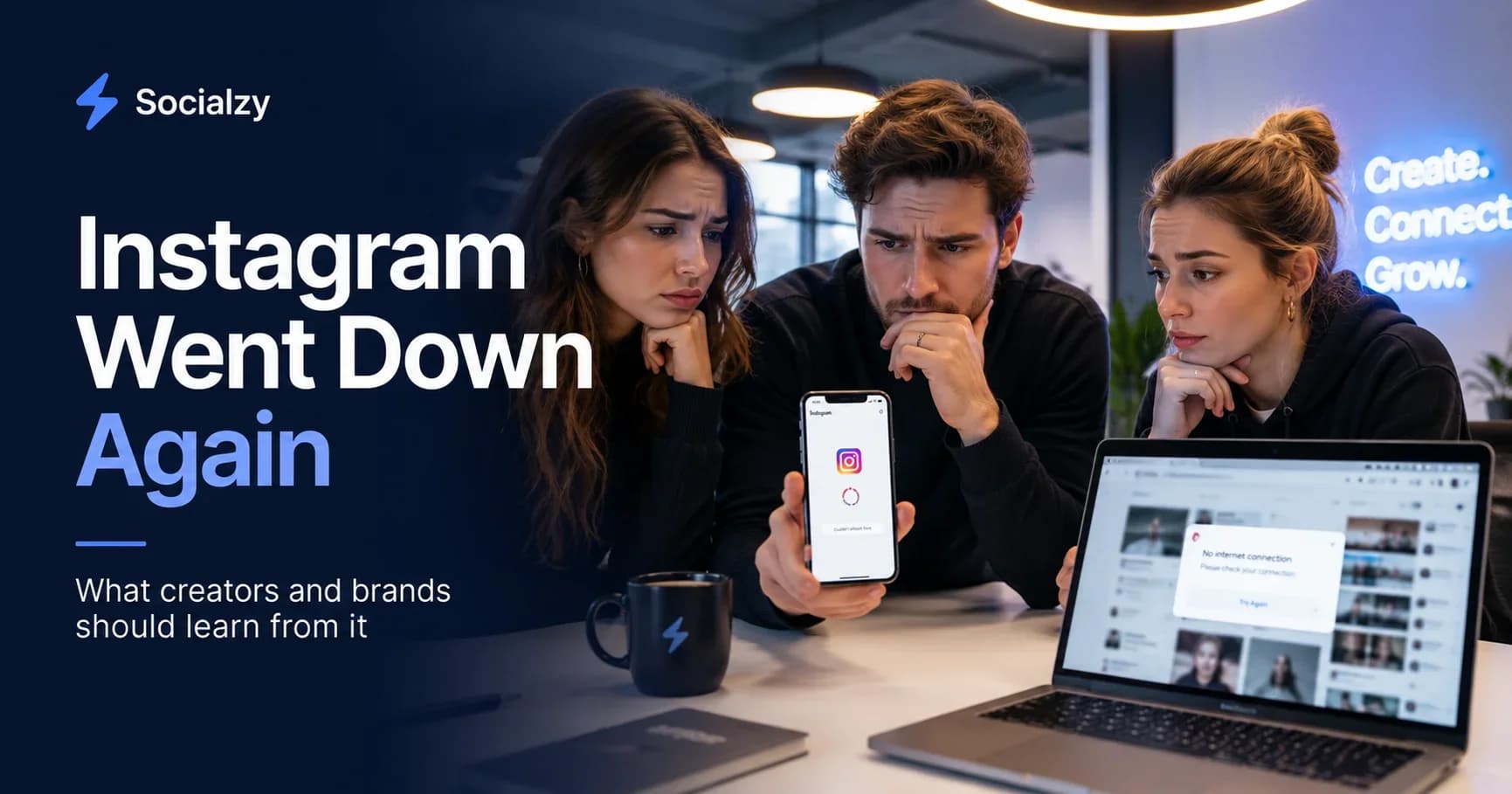
Instagram went down again, reminding creators and brands why relying on one platform is risky. Here’s what digital businesses should learn from it.

It sounds dramatic, but we’ve all been there. You have a solid page, content is flowing, and maybe there’s even a campaign running in the background. Suddenly, the app stops working. Your DMs freeze, your traffic slows down, and everyone runs to X or Reddit to ask the same thing: “Is it just me, or is Instagram down?”
Just like that, you realize how fragile your whole setup is when everything depends on someone else’s app.
H2: What Actually Happened?
The reports started piling up fast. It wasn’t only Instagram; Facebook and WhatsApp were also mentioned by users during the outage. The glitch didn’t hit everyone in the same way. Some people could open the app but couldn’t refresh their feeds, while others couldn’t log in properly or load profiles.
That’s usually the most frustrating part about these outages. You spend the first twenty minutes checking your Wi-Fi, restarting your phone, and wondering if your account got banned. Then you check another platform and realize it’s not just you.
There’s also a funny side to it: whenever Meta has a problem, people immediately run to its competitors to talk about it.
H2: Why This Is a Serious Problem for Creators and Brands
For businesses, social media downtime isn’t just a technical hiccup. It can mean lost attention, lost messages, and sometimes lost revenue.
Social media growth relies heavily on timing. A Reel might be starting to gain traction. A potential brand partner might be checking your profile. A customer might click your ad, land on a broken page, and leave within seconds because online patience is basically zero.
That’s the uncomfortable part. When Instagram is your main sales channel, portfolio, inbox, and trust builder at the same time, you don’t fully own your visibility.
You’re renting attention.
And sometimes the landlord has server problems.
H2: The Fix: Build a Presence, Not Just a Profile
A lot of people think social media growth means getting more followers on one app. More Instagram followers, more Reels views, more likes, more comments.
Those numbers matter, but they’re not the whole game.
A smarter move is simple: don’t let one app hold your whole business hostage.
Instagram can be your visual portfolio and trust builder. TikTok or YouTube can bring discovery and reach. Your website can explain what you offer without depending on an app. An email list can help you keep the relationship even when platforms have a bad day.
The goal isn’t to post everywhere just to look busy. That usually turns into messy content. The goal is to make sure people can still find you, trust you, and understand your brand even when one platform goes down.
H2: Where Social Proof and Socialzy Come In
Every time an app goes down, people become more aware of how they judge credibility online. When things come back, they check profiles fast. They look at activity, engagement, followers, views, comments, and the overall feeling of the page.
First impressions happen in seconds.
If someone lands on a profile that looks empty, inactive, or abandoned, they usually don’t wait around. They move on.
This is where Socialzy fits in.
Socialzy isn’t a replacement for good content or real community building. Nothing is. But social proof is a real part of how people decide who to trust, follow, and buy from online.
Socialzy helps support that first impression by giving your profiles a stronger, more active look while you focus on the real work: creating content, testing ideas, replying to people, and building a real audience.
The point isn’t to pretend you became famous overnight. The point is to make sure your digital storefront doesn’t look abandoned while you’re building momentum.
H2: What You Should Do Next
Don’t panic every time Meta has a server issue. Most outages are temporary, and the apps usually come back.
But don’t ignore the warning either.
Use moments like this to take a quick look at where your brand actually lives online. If all your customer conversations happen in Instagram DMs, start moving people to a website, email list, or another backup channel. If your TikTok, YouTube, or Threads profiles are completely empty, clean them up. If your website is outdated, fix it.
When an app breaks, people don’t wait around forever. They move to wherever the conversation is still happening.
Your brand should be able to move with them.
Instagram is still one of the strongest platforms in the world. But it shouldn’t be your only stage.
Use it well. Keep your profile active. Build trust. Show social proof. Create content people actually care about.
And most importantly, make sure your business doesn’t disappear the moment one app stops loading.
 1
122 May 2026
 2
218 Haz 2026
 3
318 Haz 2026
 4
418 Haz 2026
30 Haz 2026
22 Haz 2026
22 Haz 2026
20 Haz 2026
19 Haz 2026